

Audubon Raising Endangered Whooping Crane Chicks
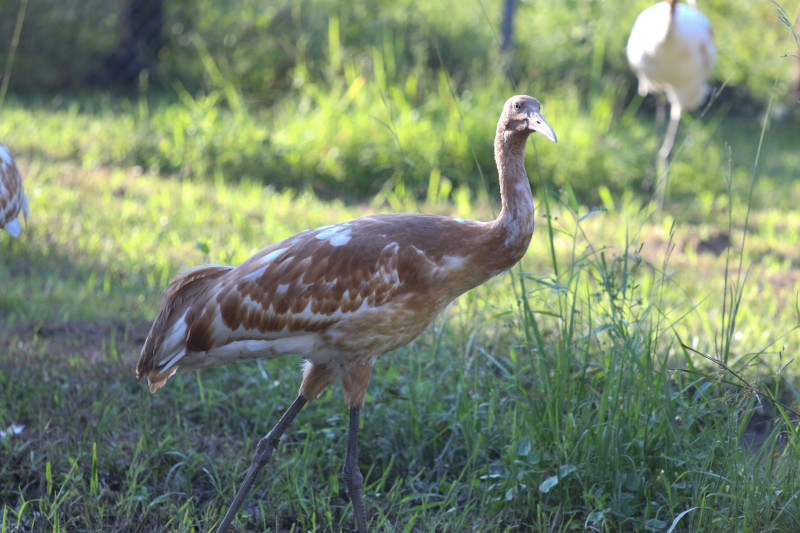
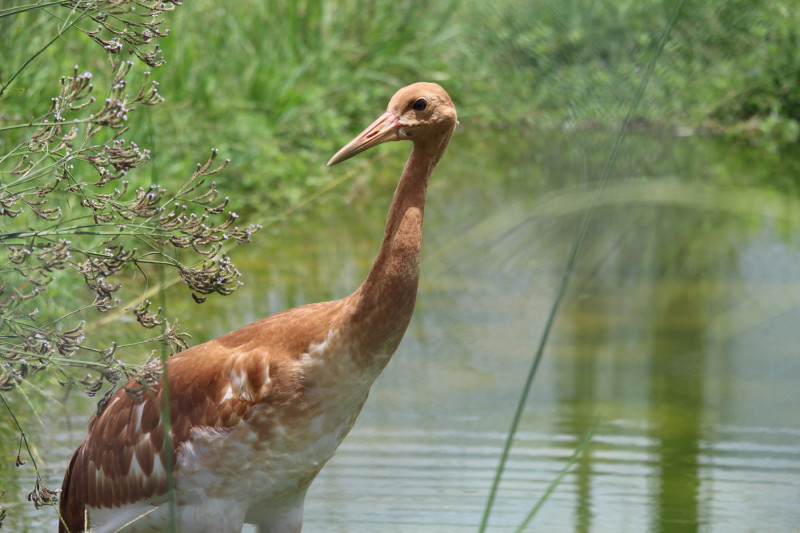
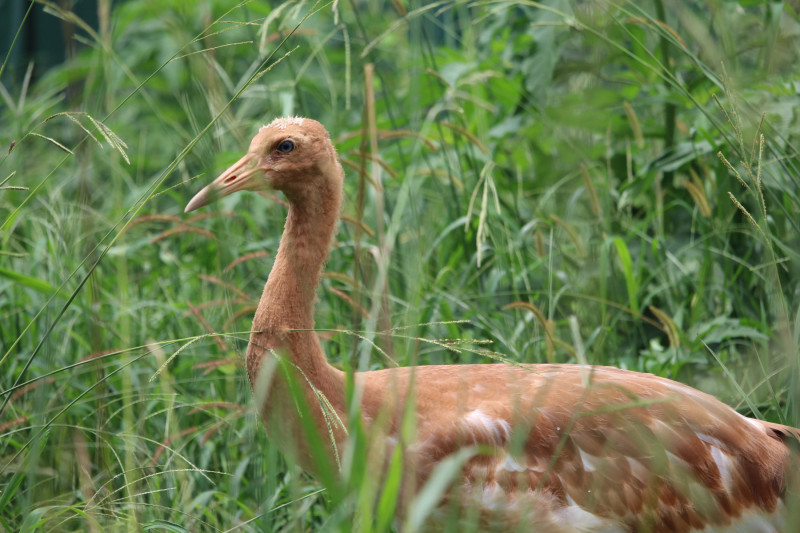
A group of seven young whooping cranes is being raised at the Freeport-McMoRan Audubon Species Survival Center, part of an ongoing effort to save these endangered birds from extinction. The youngsters hatched earlier this year, and five of them will be released to the wild this fall to help build a sustainable population of these magnificent birds in Louisiana.
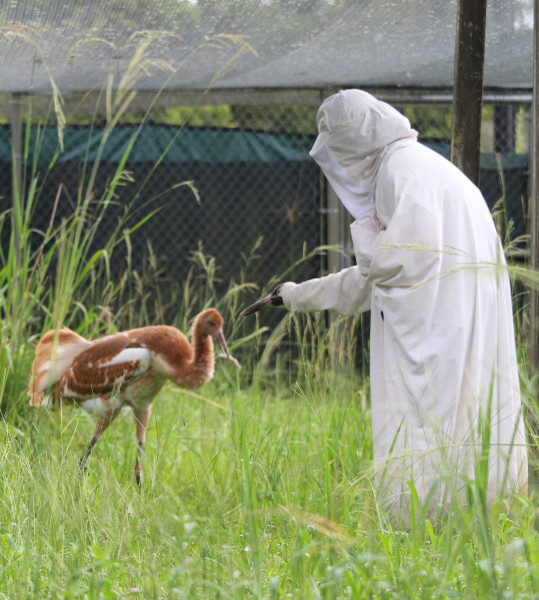
Several of the chicks were hatched from eggs from a migratory whooping crane flock in Wisconsin, and then transported to Audubon from the International Crane Foundation. One chick was from an egg laid by one of the birds in the wild Louisiana flock. The chicks are being hand-raised by keepers wearing crane costumes to limit their exposure to humans. Five of the birds will be released to the White Lake Wetlands Conservation Area in Vermillion Parish, the remaining birds will be kept in human care for breeding.
All of this year’s chicks are named for types of pasta: Fiori, Capellini, Ziti, Vermicelli, Gemelli, Gigli, and Lasagna.
Audubon Nature Institute is an active part of whooping crane conservation and works closely with the Louisiana Department of Wildlife and Fisheries and other partners with the goal of developing a self-sustaining population of whooping cranes in Louisiana. This partnership is an example of the importance of collaboration between state agencies and non-profit organizations, leveraging the strengths of both to achieve measurable conservation results and make a significant, historic impact on the future of this species. With the support of U.S. Fish and Wildlife Service, Chevron, Louisiana Department of Wildlife and Fisheries, Audubon is committed to the long-term growth and stability of the whooping crane population to save the species from extinction.
“Every whooping crane chick that is successfully raised for release or breeding is one critical step in the preservation of these species,” said Richard Dunn, Assistant Curator at the Species Survival Center. “We are encouraged to see birds grow to adulthood and released to our Louisiana population.”
Since its inception, the Freeport-McMoRan Audubon Species Survival team has raised 55 whooping cranes and after this group is released, Audubon will have released 31 chicks to the wild. Whooping cranes are large-bodied, white birds with a red head and black facial markings. They are five feet tall and have a wingspan of seven to eight feet. In flight, whooping cranes display black wing tips, a fully extended neck, and legs which extend well beyond the tail.
As one of only six whooping crane breeding facilities in the U.S., support of project partners is vital to the long-term success of the whooping crane population in Louisiana.
“At Chevron, we recognize the importance of protecting ecological diversity – the rich variety of wildlife, its ecosystems and species, and the ecological processes that support them,” said Leah Brown, Public Affairs Manager for Chevron’s Gulf of Mexico Business Unit. “Chevron looks forward to these whooping cranes being released into the wild. We also thank Audubon Nature Institute for our long-standing partnership – and for helping ensure this endangered species is thriving for generations to come.”
The Louisiana flock was developed in 2011 when 10 whooping cranes from the U. S. Geological Survey Patuxent Wildlife Research Facility in Maryland were released to the White Lake Wetlands Conservation Area in Vermilion Parish to develop the non-migratory flock. This marked a significant conservation milestone with the first wild whooping cranes in Louisiana since 1950.
Anyone encountering a whooping crane is advised to observe the bird from a distance and to report the sighting to LDWF: https://www.wlf.louisiana.gov/page/report-a-whooping-crane-sighting-or-violation
Anyone witnessing suspicious activity involving whooping cranes is advised to report that information to LDWF’s Enforcement Division by calling 1-800-442-2511 or by using the anonymous tip411 program. Citizens can text LADWF and their tip to 847411 or download the "LADWF Tips" app from iTunes or Google Play free of charge. Citizen Observer, the tip411 provider, uses technology that removes all identifying information before LDWF receives the text so that LDWF cannot identify the sender.