

Critically Endangered Sea Turtles Arrive at Audubon for Care
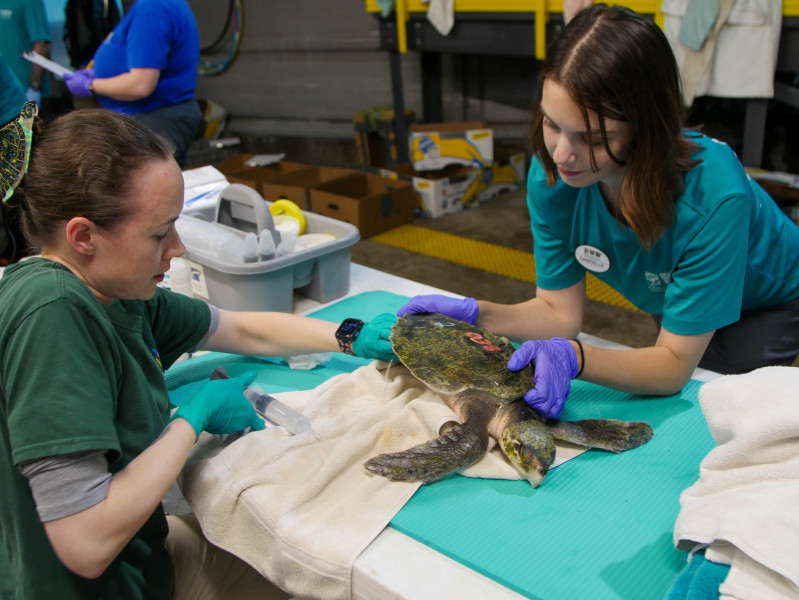
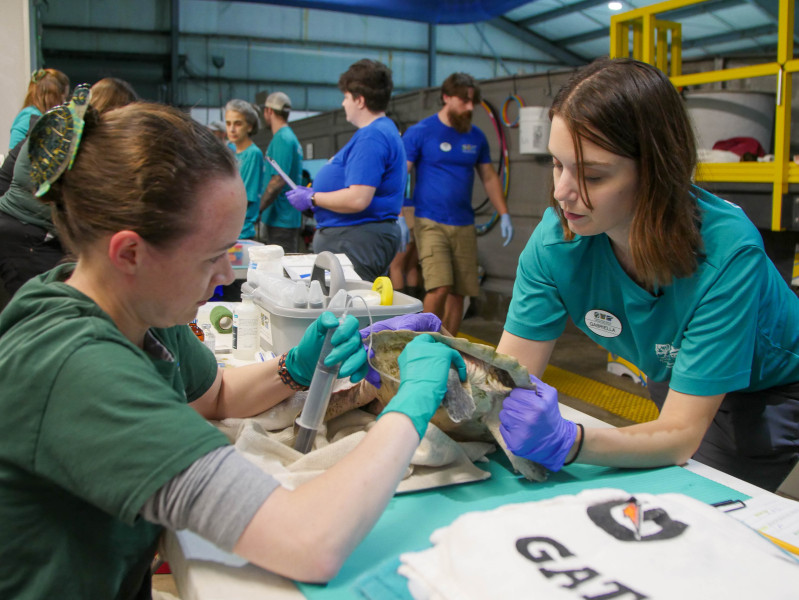
Audubon Aquarium Rescue recently received 16 critically endangered sea turtles to care for after the animals were found struggling with cold weather in New England. Sea turtles typically migrate south in the fall, but if they don’t make the migration before coastal waters cool, they can face deadly consequences.
These 16 Kemp’s ridley sea turtles were airlifted to warmer climates to recover from a large cold-stunning event off the coast of Massachusetts. When turtles are cold-stunned, their heart and breathing rates slow and they become lethargic, unable to find food, and are at risk of being hit by boats as they float along the ocean surface. Fortunately, these turtles were rescued and received initial treatment at the National Marine Life Center and New England Aquarium before being flown to rehabilitation facilities along the East Coast and Gulf of Mexico, including New Orleans’ Audubon Aquarium Rescue.
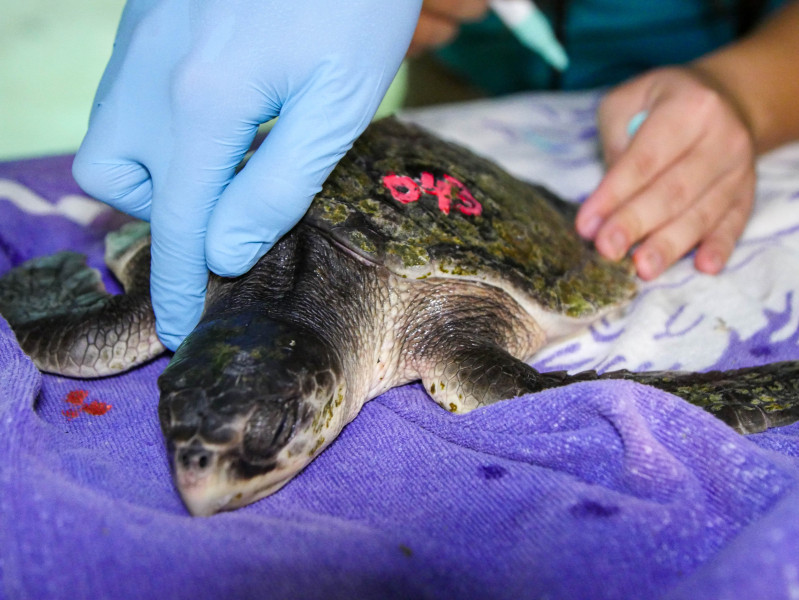
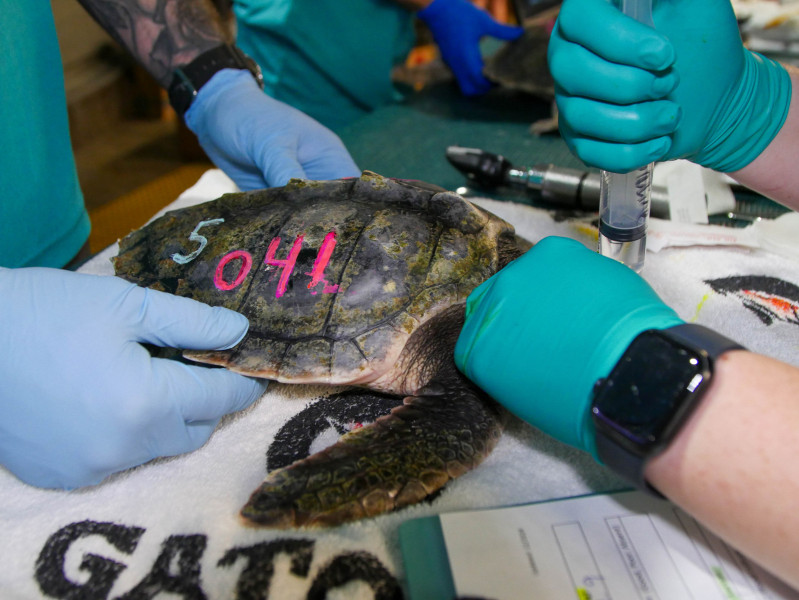
When they arrived at Audubon’s Aquatic Center at the Freeport-McMoRan Audubon Species Survival Center on the Westbank, they underwent complete intake exams, which included radiographs, physical exams, blood test, treatments, and a swim test, in order for the Audubon team to assess their health and determine if they were strong enough to swim successfully on their own. Each turtle has a specialized treatment plan to ensure they are receiving the individualized care they need.
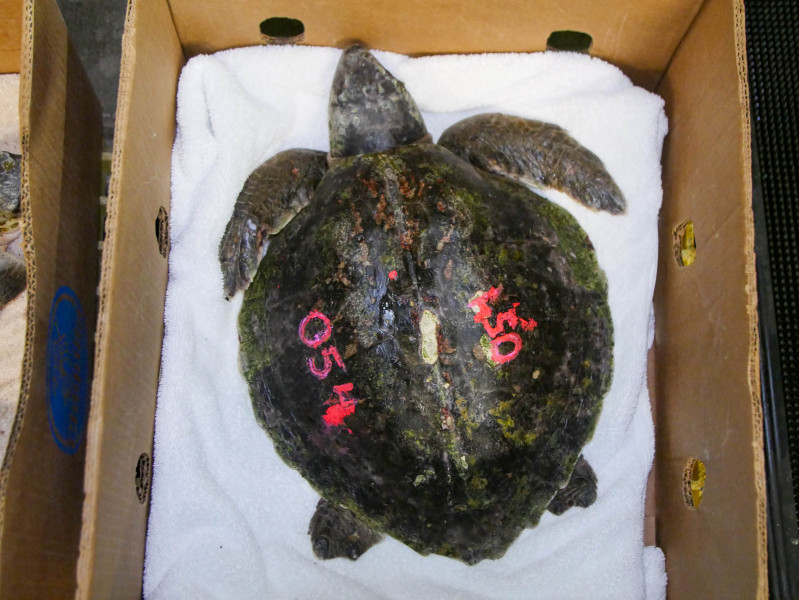
Audubon Aquarium Rescue team members will name the newcomers after constellations in order to tell them apart. Right now, the turtles each have numbers painted on their shells for identification purposes.
“Kemp’s ridley sea turtles are the most endangered sea turtle. These were fortunate to have survived the initial cold-stunning event. Cold weather that drops water temperatures and shifting wind patterns can lead to hundreds of turtles facing cold-stunning every year. We are thankful to have a network of groups working together to get them to safety,” said Audubon Marine Mammal and Sea Turtle Stranding and Rehab Coordinator Gabriella Harlamert. “Our goal is always to help them recover and returned to the Gulf of Mexico as soon as water temperatures are warmer.”
The Kemp’s ridley turtles arrived in New Orleans from New England as part of a multi-stop transport by Turtles Fly Too, Inc., which recruits “Turtle Fliers,” who donate their expertise, aircraft, fuel, and labor in order to help rescue efforts of endangered species around the country. In spite of the long transport journey, the turtles are in good condition and are already on the road to recovery.
The turtles will be monitored intensively during their recovery at Audubon. Each will have its own specific treatment plan for any remaining health concerns. While the ultimate goal is to release the turtles back into the Gulf of Mexico, there is currently no estimated timeframe for that to happen.
Coordinated by Audubon Nature Institute, Audubon Aquarium Rescue serves as NOAA Fisheries' primary marine mammal and sea turtle stranding network partner in Louisiana. AAR is committed to the humane care and treatment of injured, ill, or displaced marine animals in Louisiana and is the only entity in the state responsible for the rehabilitation of live marine mammals and sea turtles. The information AAR collects from stranded animals provides a snapshot into the health of the marine environment and provides a better understanding of threats to marine mammals and sea turtles in the wild.
If you see a stranded marine mammal or sea turtle (live or dead), report it to Audubon Aquarium Rescue at 877-942-5343.
When reporting strandings, Audubon Aquarium Rescue will need:
- Exact location and/or GPS coordinates
- Photographs of the animal if you have them
- Nature of the report (type of animal/live or dead/size, etc.)
Please keep these things in mind when reporting a live stranded animal:
- Put human safety above animal safety. If conditions are dangerous, do not attempt to approach the animal.
- Keep crowds away and noise levels down to avoid causing stress to the animal.
- Don't push an animal on shore back into the water.
- If the animal returns to the water on its own, don't attempt to interact with it.
- Leave anything the animal is entangled in on the animal.
To donate to Audubon Aquarium Rescue’s efforts to help these endangered animals, follow this link: https://audubontransactions.org/donations/donate-cwn.html